Geothermal Is More Than Electricity, and COP31 Noticed
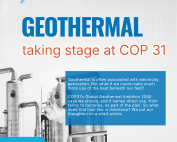
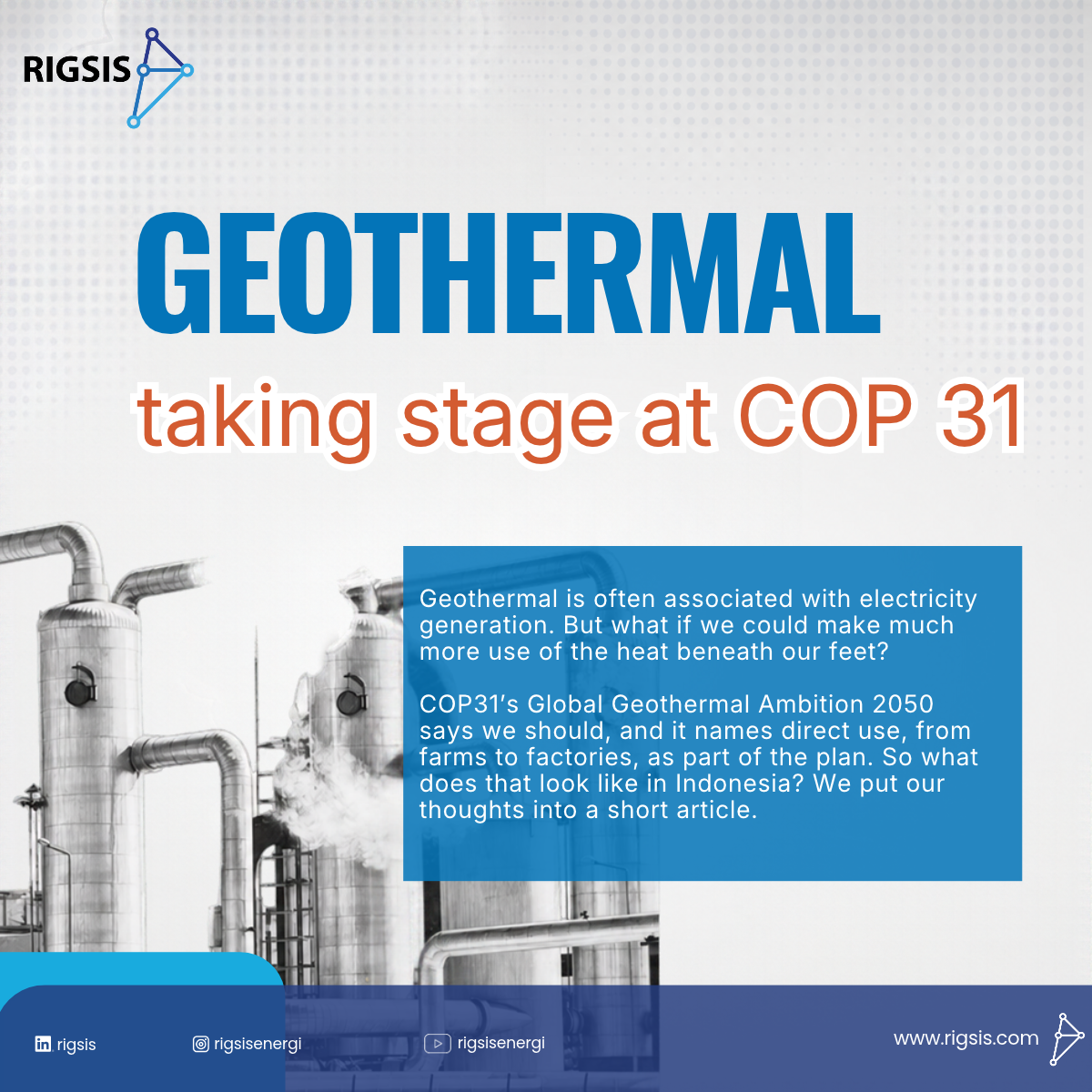
Most of the headlines about COP31 in Antalya went to electrification and the slipping 1.5°C target. Geothermal got less airtime. But on 10 November something happened that we should pay attention to: geothermal got a pledge of its own. And unlike a lot of geothermal talk, this one doesn’t stop at electricity.
The Global Geothermal Ambition 2050 is initiated by the COP31 Presidency in collaboration with the International Renewable Energy Agency (IRENA). The headline goal is to scale geothermal supply for power and heat to 12 times its 2025 level by 2050.
According to the IRENA figures referenced in the pledge, global geothermal energy supply is expected to grow from approximately 2.5 exajoules (EJ) to 31 EJ, while installed geothermal power capacity is targeted to increase from 15.6 GW in 2025 to 193 GW by 2050. These figures reflect a growing recognition of geothermal as an important part of the global energy transition. However, what makes this pledge particularly interesting is that it does not focus only on electricity. It also puts geothermal direct use on the agenda.
Heat is in the room. Bigger role for geothermal.
Geothermal is commonly associated with power plants, turbines, and electricity generation. Yet, the heat from geothermal resources can also be used directly without first converting it into electricity. This is what we call geothermal direct use. The Global Geothermal Ambition 2050 pledge recognises the added value of direct use. It highlights the use of geothermal for heating and cooling in buildings, industrial applications, and agri-food systems. Tourism is also recognised as an area where direct-use applications can create additional value. Heat rarely gets this much space in a climate text. Türkiye, as host, pointed to its own district heating, which it says now serves the equivalent of around 170,000 homes.
These applications offer another way to make use of geothermal resources, particularly in areas where the available temperature and resource characteristics may be suitable for direct heat applications.
The pledge also recognises that expanding these applications requires more than available resources. It calls for stronger collaboration between governments, businesses, utilities, and local communities to connect geothermal resources with actual energy demand. Heat doesn’t travel far, so direct use only works when the resource, the user and the economics sit close together.
What does the pledge mean for geothermal development?
Twelve times more geothermal by 2050 sounds huge, and it is. But a number on paper doesn’t drill a single well. What the Global Geothermal Ambition 2050 really does is point to four things that have to move together.
1. Mobilizing investment and access to finance
Geothermal needs a significant upfront investment before anything is proven. Exploration and resource assessment come first, and you only know what’s underground after you’ve paid to find out. So the pledge calls for more public and private investment, ways to share that exploration risk, and financing that developers can actually afford.
2. Strengthening Policies and Supporting Infrastructure
Developers need to know what to expect: clear regulations, permits that don’t drag on, and a market where a project makes sense. Power grids and heat networks have to be ready too, otherwise the energy has nowhere to go.
3. Direct use gets a real seat at the table
Geothermal isn’t only about electricity. The pledge also backs using the heat directly, for heating and cooling in buildings, industry and agri-food. The idea is to connect the resource with people who need heat nearby, and to offer energy services that are affordable and make business sense.
4. People and know-how
Research, new technology, training and sharing knowledge all matter, especially for emerging markets that are just getting started.
Put together, the message is simple: more megawatts is not the whole story. The real work is taking a project from “there’s heat underground” to something that runs, pays for itself and benefits the community around it.
Taking this to Indonesia context.
For Indonesia, this conversation is relevant. We’re one of the world’s leading geothermal countries, and the same resource that runs our power plants can also deliver heat straight to farms, factories and villages. Here, geothermal has mostly meant electricity. Direct use is still at pilot scale
According to the Geological Agency of Indonesia, as of December 2024, identified geothermal resources for direct use reached 222.77 MWt, with proven reserves of 8.1 MWt. The inventory covered 201 of 362 identified geothermal potential locations. (MWt measures heat, not electricity.)
This isn’t just on paper. It’s already happening in a few places such as Kamojang, West Java. Pertamina Geothermal Energy (PGE) worked with local farmers to build the Geothermal Dry House, a facility that dries coffee beans using heat from the field’s steam traps. PGE describes it as the first technology of its kind in the world to use geothermal heat directly in coffee processing, and says it’s patented. The Geothermal Dry House can accelerate the drying process resulting in lower operational costs and increased production capacity. The end result is coffee beans with a richer flavor and stronger aroma than conventional methods
Another example is Patuha KaDieu (Kampung Direct Use) started by Geo Dipa as a pilot in 2024. It brings geothermal heat into village life through a heated greenhouse, a fish pond, tea dryer and a small food dehydrator, with eco-wellness facilities and other farming uses in the wider plan. Geo Dipa calls it a living laboratory, a place to test geothermal technology close to everyday community needs and to create new ways for local people to earn a living.
These aren’t the only ones. Other geothermal fields, including Ulubelu and Lahendong, have also looked at using geothermal heat to dry agricultural products. These show that geothermal can do more than keep the lights on. It can help farmers dry their crops faster, give village businesses a new tool, and create work around geothermal areas.
Indonesia also took geothermal to Antalya. At the Indonesia Pavilion, the government promoted six geothermal power projects from Geo Dipa Energi and Star Energy Geothermal, as part of 27 carbon projects offered to international partners. Some are still early-stage, and some are already certified.
Our take
Pledges don’t drill wells. Twelve times more geothermal means more exploration, more reservoir studies, more drilling, more surface facilities and civil works, and the people to do all of it well. For direct use it also means someone sitting down with a tea, coffee or food producer and working out honestly whether the temperature, the distance and the economics add up.
That’s the work after Antalya, and it’s where we’d like to see the conversation go next: which projects get de-risked first, and which direct use ideas move from pilot to routine. For us, that’s what #PoweringPotential means in practice, powering the potential of geothermal and the industries that can use its heat.
Source: